Between human and cosmic time
I still remember very clearly the first time I observed what has become one of my absolute favourites in the night sky. One late spring evening, standing in the yard in Rendalen, I turned my telescope towards a faint, fuzzy patch of light in the constellation Hercules, near Fuggsjøvola just above the eastern ridge of the valley. It turned out to be the globular cluster M13, a collection of several hundred thousand stars approximately 22,000 light-years from Earth. Through the eyepiece, it appears as a glowing sphere with hundreds of points of light drifting in and out of the darkness - points of light that started their journey towards Earth when humanity was still in the Stone Age.
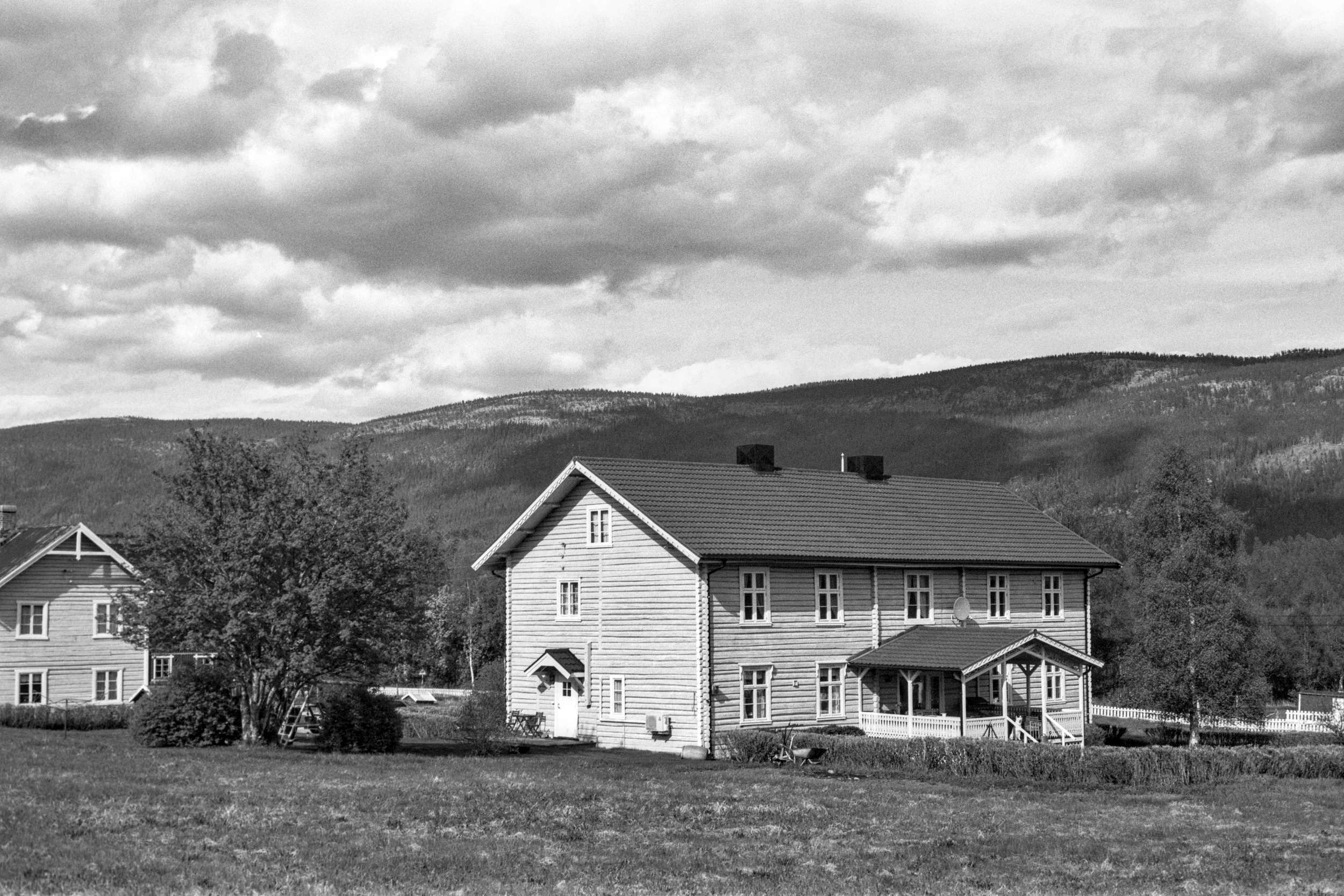
The farm in Rendalen, where the observation of M13 took place.
My interest in astronomy has found its way into my artistic work in various ways – both as a philosophical and existential backdrop, and as a more direct musical point of departure. In Reflections in Light – PRISM, I borrowed the names of the stars in the Summer Triangle asterism – Altair, Deneb and Vega – to title different movements. The constellations to which these stars belong helped shape different aspects of the music. Altair, located in the constellation Aquila (the Eagle), was for instance an explosive and energetic movement, while Deneb in Cygnus (the Swan) was slow and elegant. Cygnus X1, a commissioned work for double bass orchestra written for the Molde International Jazz Festival in 2021 and named after the first black hole ever discovered, was inspired by gravitational waves from black holes, represented through the slow, rolling and dark sonorities of the double bass.
In 2025 and 2026, two new works emerged that were also inspired by the night sky. Requiem for a Star – Cosmic Soundscapes of Destruction and Creation and Pusteøvelse for tre musikere (Breathing Exercise for Three Musicians) both grew out of questions related to time, space and our place in the world. Although the two works have very different points of departure, I discovered during the process that they were ultimately exploring many of the same ideas.
Requiem for a Star – Cosmic Soundscapes of Destruction and Creation was created in collaboration with the Cikada String Quartet. The work grew out of my own astronomical sketches, photographs from the Hubble Space Telescope, and a long-standing fascination with the life cycle of stars. When we look up at the night sky, we do not see the world as it is now, but as it once was. In a similar way, sound and music can be experienced as a medium that connects different experiences. Tones emerge, resonate and disappear, yet leave traces in memory and permanently alter our perception of reality. The work explores different processes in a star’s life cycle, from their birth in vast clouds of dust and gas to their eventual transformation into planetary nebulae or supernovae.
While working on the piece, I repeatedly returned to Olaf Stapledon’s novel Last and First Men, published in 1930. The book presents an imagined timeline of humanity stretching across billions of years and eighteen successive human species, of which we are the first, moving freely between individual lives and cosmic timescales. What struck me most was not the futuristic visions, but the sense of wonder that conscious life exists at all. Equally moving were the reflections of the last human species as they confront their fate while the Sun approaches the end of its life cycle. As Stapledon writes: “The stars have their beginnings and their ends; and for a few moments somewhere in between a few, very few, may support mind.”
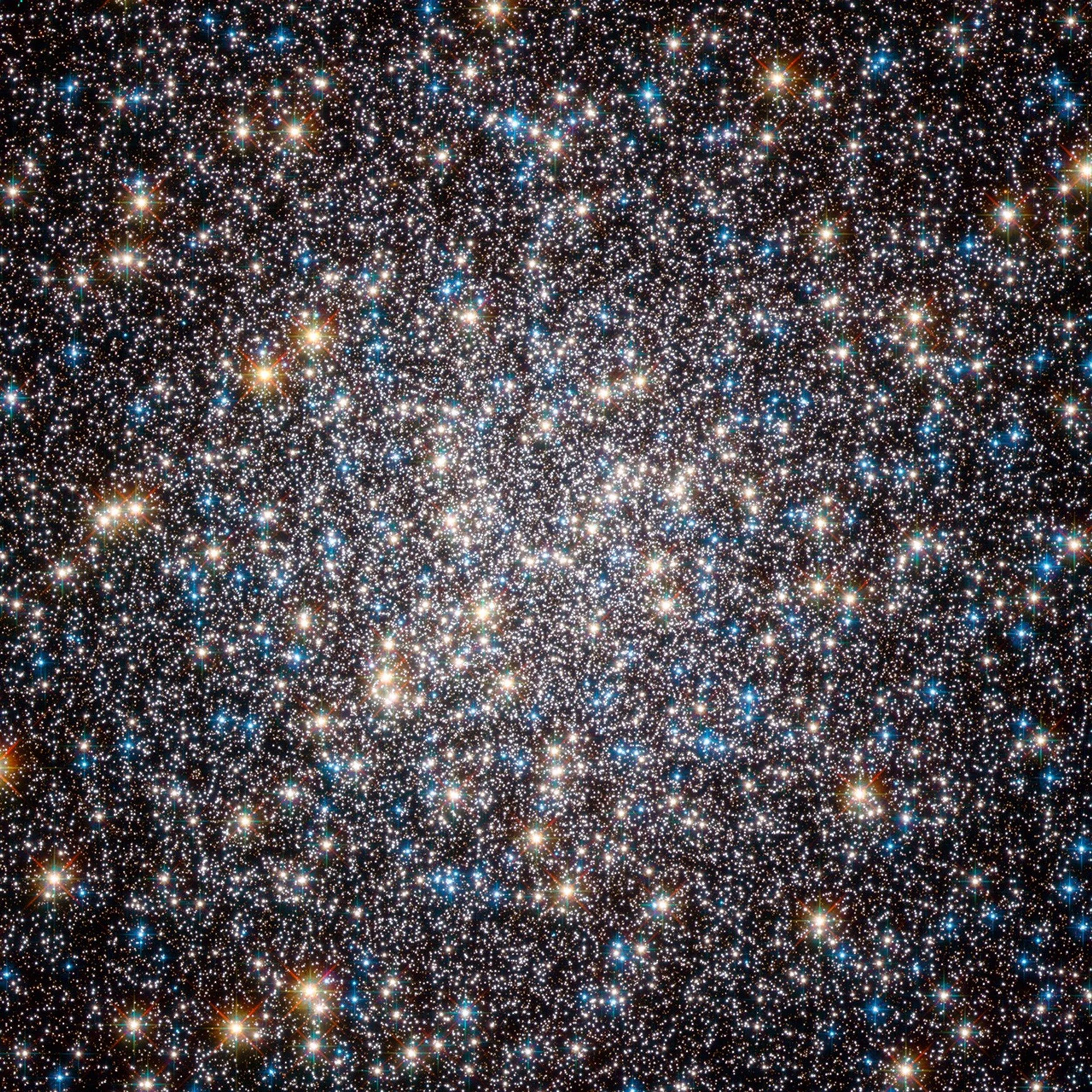
M13
While Requiem for a Star – Cosmic Soundscapes of Destruction and Creation turns its gaze outward towards the cosmos, Pusteøvelse for tre musikere (Breathing Exercise for Three Musicians) emerged from something far more earthly. Commissioned by the Nordic Poetry Festival, the work takes its point of departure from Rolf Jacobsen’s poem Pusteøvelse and was written for Frode Haltli, Helga Myhr and myself. The poem opens up reflections on the insignificance of human life when measured against the overwhelming scale of the universe. Here, breath became the very foundation of the music. Not merely as something that makes sound possible, but as a fundamental expression of life itself.
Yet over time I found that the two works gradually moved closer to one another. A star’s “breath” unfolds across billions of years. The human breathing cycle lasts only a few seconds, and our lives are but a brief flicker in a cosmic perspective. The difference in scale is immense, yet both are shaped by rhythms, cycles and transformation. Perhaps it is precisely such connections that interest me most as an artist: the relationship between the very near and the unimaginably distant, between human and cosmic time.
The philosopher Byung-Chul Han writes about Vita Contemplativa – the contemplative life – as an antidote to what he calls The Burnout Society. In a time characterised by haste, endless streams of information and constant distraction, I find that both music and astronomy can remind us of the contemplative. Both invite a slower form of attention. Both require time. Both can encourage us to look beyond ourselves and recognise that we are part of realities far greater than our own plans and projects.
Listening is not only about sound. It is about directing our attention towards the world and towards what is already there. Whether it is a breath in a room, the wind moving through the treetops, or the light from a star that began its journey towards Earth long before any of us were born.
Image credits
The farm in Rendalen: Sigurd Hole
M13: ESA/Hubble and NASA